
Report Review: Emerging Trends in Real Estate
By: Ali Emre Soner, Urban Policies Expert, MMU
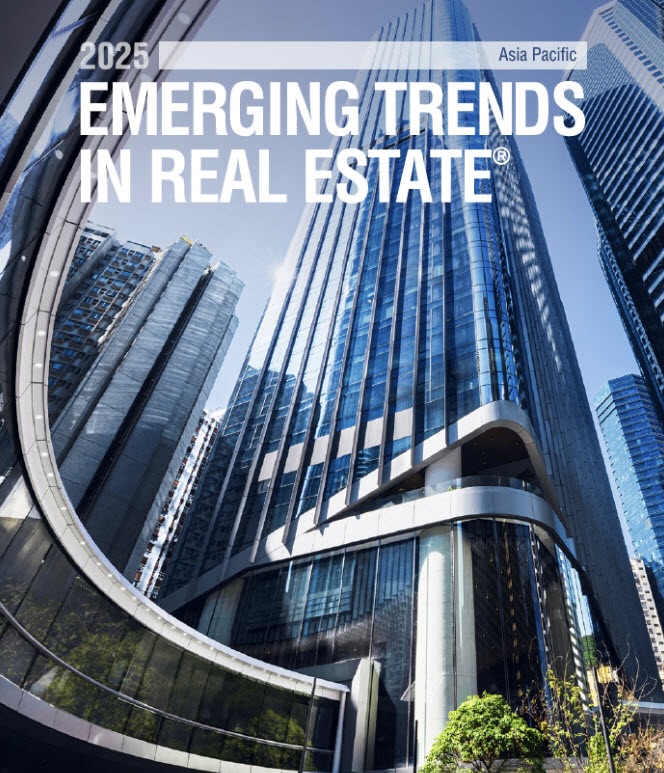
The Report, Emerging Trends in Real Estate, prepared by collaboration of Urban Land Institute and PwC, is one of the most widely known publications in the sector. In this article, I will attempt to provide a synthesised overview by examining the US-Canada and European reports together, from among the publications produced at four different scales: the US-Canada, Asia-Pacific, Europe, and Global Outlook.
In both reports containing foresights about 2026, it is strongly reflected that the common theme is “navigating through uncertainties”. While the cautious optimism that prevailed last year in Europe evolves to a rather pragmatic approach, especially as the geopolitical disagreements in the relations with the US are reinducing investments, investors have different expectations about the course of this uncertain atmosphere on the part of the US. According to the survey results which have a mixed participant profile such as the commercial developers, contractors, banks, investment partnerships and staff of the construction companies at various ranks, there are some who expect the decrease in the interest rates to have positive impact over the capital markets, while there are also others who think the changes in trade and migration policies will have long-term impact on the demand for the sector.
The primary sources of uncertainty include the geopolitical instability and trade conflicts. While on the part of Europe, the war ongoing in Ukraine and the crises in the Middle East are seen as the primary factors, it is told that the course of “deglobalisation” with the US is found worrying. Also, the political instability for 2026 within Europe emerge as the most prominent source of consideration. And on the part of the US, the consequent impact of the changing immigration policies over the working population is observed to emerge as the primary reason for the decrease in the real estate demand. It is estimated that reconfiguration of trade together with the political crises, and especially the increase in the customs taxes will raise the construction and operation costs. Even though the inflation values are in decrease, high inflation risk finds a place in the surveys, while on the part of Europe, considerations about the risk of stagflation gained a new rise this year. And on the part of the US, there is reservation that the policies of immigration and customs taxes may slow down the process of the lowering of the interest rates. As a result of all these factors, concerns about rising costs are commonly emphasised in both regions. In Europe, it is said that the extension of bureaucratic processes because of measures taken against environmental problems and climate change has affected costs, while the US is more focused on the impact of immigration restrictions on the labour force.
Rise of some trends in the sector continue under the shadow of political and macroeconomic developments. Investments in data centres established to provide the computing power required by rapidly developing artificial intelligence technologies, and infrastructure investments made to supply energy to these centres, top the list of trends. While student housing solutions in Europe maintain their place on the list, demand for housing designed to meet the living standards of elderly individuals is also increasing in the US, partly because of the ageing population. Reports have highlighted the significant impact of technological adaptation on how companies operate. While digitalisation and the adaptation of artificial intelligence to business processes are among the factors influencing investment decisions, the automation of asset management tools in the United States under an umbrella of integrated artificial intelligence systems, digital twins, and data management within the scope of ‘propOS’ is also seen as one of the trends that will be effective in 2026.
The unstoppable rise of artificial intelligence is increasing its impact on both the operational and investment sides of the real estate sector every year. It has been noted that artificial intelligence models integrated into business processes, especially when fed with good data, increase efficiency. While in Europe it is mentioned that it is used more in companies' strategic planning and administrative transformation, in the US and Canada the focus is on ‘Agentic AI’ in solving operational excellence problems and asset management. It is reported that, particularly in residential property management ‘PropOS’ technology offers cost-effective solutions when combined with good data and property rights management. On the investment side, the sector's growth is increasing the appeal of data centres. The energy source required by data centres is identified as a bottleneck in the face of hyperbolically increasing demand for processing capacity. While great importance is attached to the interconnectedness of data centres in Europe, the continent is also seeking unique solutions to be developed within its borders to combine advancing technological benefits with production to reduce dependency amid increasing political polarisation.
While artificial intelligence is triggering new developments in the sector, one of the key areas it is impacting is the workforce. A significant decline in recruitment, particularly of recent graduates, has been observed in both regions, while the possibility of automation processes taking more jobs away from people is seen as a potential crisis in terms of economic balance. In addition, while concerns about the protection of personal data with the use of artificial intelligence are increasing, attention is being drawn to the importance of regulating the use of artificial intelligence with specific definitions in some regions, such as Quebec.
While artificial intelligence and political stalemates continue, behavioural differences that could almost be described as a crossroads are being observed in the adaptation processes to environmental issues and climate change. Although commitment to decarbonisation in Europe still retains its critical importance, views that some regulations complicate bureaucratic processes are also finding traction. There are also views that asset managers still need to link sustainability goals to value creation and investment performance. Additionally, although there has been a decline compared to previous years, half of the survey participants believe in the tangible impact of sustainability commitments on asset values. The US, on the other hand, is progressing differently from Europe in the field of sustainability with changes in federal government policies. There are reports that some companies are placing sustainability- related content further in the background in their communications compared to previous years. Although the two regions have chosen to pursue different policies, the concrete effects of climate change are felt equally. In the US, the rise in insurance premiums due to disasters, particularly in coastal areas, is a factor causing concern for many investors in terms of declining net income. Furthermore, the increase in extremely hot days in warm regions is triggering internal migration. This is also seen as a factor increasing expenses in asset management. Europe, as one of the most rapidly warming continents takes its share in the rise of the insurance premiums. It is also included in the report that frequent floods and forest fires increase the risk factor for the insurance sector and in some regions, this ended their business.
Affordable Houses?
The issue of affordable housing compared to resources remains a significant problem for both regions. However, the regions' approaches to this issue differ in terms of the extent of state intervention, incentive mechanisms and classifications in investment strategies. For Europe, the housing problem is seen not only as a social issue but also as a macroeconomic threat to the region's economic competitiveness. While it is a high priority and a focus of concrete targets on the part of the policies, the investors see it as an area where there is high demand but increasingly difficult to generate capital. For this reason, it mentioned by the sources that steps will be taken to develop public-private partnerships, and the European Investment Bank has committed approximately €6 trillion to this area. In the US and Canada, the housing crisis continues to be seen as a critical social and political issue by more than half of the sector's leading players. Housing production for middle-income households ranks high among next year's expectations, it is emerging as an attractive sub-sector as limited development in this area has reduced occupancy rates. Meanwhile, rising housing prices and rents are triggering migration from major metropolitan areas, and leading to demographic changes in the region. While the federal government is increasing subsidies for low-income housing production, it is observed that efforts are also being made to open public land for the development of such projects and for redevelopment projects.
The fifth edition of Urban, the compilation issue of the magazine Kent published by Marmara Municipalities Union with the motto “Cities Developing Solutions”, is now available.
You can download the entire magazine by clicking here.